Museum Education Traveling Programs
 Old Sturbridge Village is excited to offer in-classroom programming. Educators can utilize these programs as pre-visit preparation to get students excited to come to the Village or as a standalone experience.
During these experiences, two museum educators from OSV will come to your classroom to deliver fun, hands-on programming related to one of the themes below. All programs will be grade-level appropriate and incorporate Massachusetts and Connecticut Social Studies Learning Standards.
Details:
- Days available:
- September-October and March-April: Mondays and Tuesdays
- November-February: Monday-Friday
- Cost: $350 (maximum of 30 students). Additional programs on the same day are available for an additional fee.
- Program length: 60 to 90 minutes, depending on the program, teachers’ needs and age of students
- Time: The Program will take place at a mutually agreed-upon time between OSV and the school
- Location: Your classroom!
- Please note: Programs are designed for a max of 30 students per session. We can potentially offer more than one program per school visit, depending on timing and staff availability.
- To set up a visit, please contact us at [email protected] or (508) 347-0274.
Program Options
19th-Century District Schoolhouse | Grades K- 5
In this program, students will learn about what education was like for young scholars in the 19th century and compare to their school today. When did students go to school in the 1830s, and what did they learn there? What were classrooms and teachers like? Was education the same for everyone, or did it vary based on race, location, and socioeconomic status?
Activities may include:
- A 19th-century school lesson conducted by costumed educator, utilizing period schoolbooks and slates
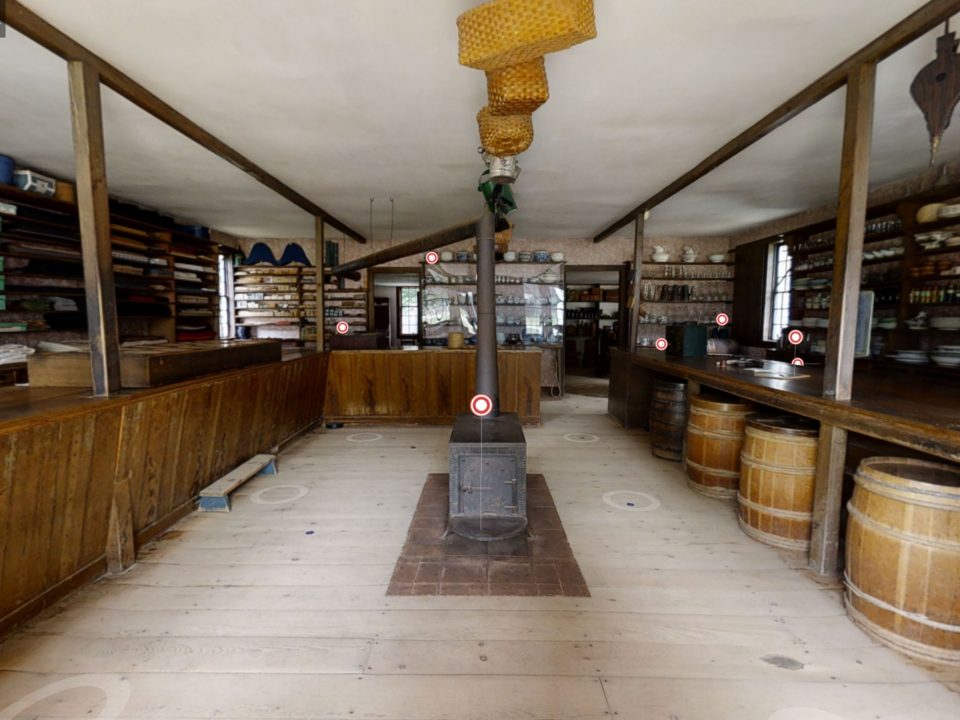
- Looking at the 3D tour of the Village’s District Schoolhouse
- Creating a Venn diagram to compare school today to school in the 1830s
- Learning a schoolyard game
- Practicing penmanship
Textiles in the 19th Century | Grades 1-5
What we wear is closely tied to our identities, but how often do we think of how that clothing is made? During this program, students will explore how textiles (especially wool and cotton clothing) were produced in the late 1700s and 1800s in factories and at home. We will look at where these fibers came from, discuss textiles and links to slavery, and learn why New England’s geography contributed to its success during the Industrial Revolution.
Activities may include:
- Trying out weaving
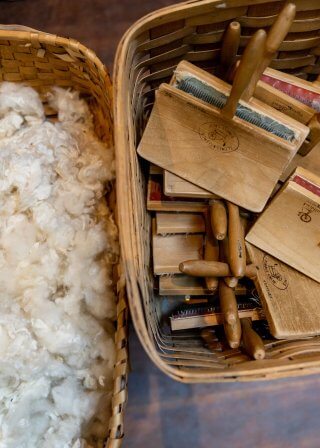
- Carding wool and feeling the textures of natural fibers and fabrics from different time periods
- Looking at clothing from the 1830s and comparing to clothing today
- An exploration of the Industrial Revolution, and the technology and mechanics involved in textile manufacturing, and its effects on the environment
Food Preservation | Grades 1-5
Today, we have all sorts of ways to keep food from going bad, from refrigeration to freeze-drying. Participants in this program will learn about the ways that people in the 1830s kept their food good during New England’s long winters. We’ll also explore where food came from in the 1800s and how people used different ingredients in their day-to-day lives.
Activities may include:
- Making butter
- Examining maps and historic recipes
- Smelling and touching different ingredients
- An exploration of period cooking tools and technology
Please note: This program will include various food-related items, including spices, dairy, and gluten. Please take this into consideration when booking this program.
Printing and Information in the 1800s | Grades K-5
Technological advancements have made it much easier to disseminate information in the modern day. For all of the 19th century, though, Americans had to rely a lot on documents created in printing offices to learn about current events around the world and in their communities. During this workshop, we will learn about how the printing office of the 19th century worked, and what they made. Who worked in the printing office, and how did they learn their skills? How did information and news spread during the 1800s, and how is that different from today?
Activities may include:
- Examining primary sources like broadsides, books, and newspapers
- Creating a piece of marbled paper or print block
- Sorting and arranging type
- Bookbinding a simple journal
- Exploring new communication methods of the time, including Braille and Morse Code
Be a Curator: Designing an Exhibit | Grades 3-8
What goes on behind the scenes of a museum? In this program, students can explore history like a curator and learn the techniques they use to handle objects and design exhibits. Students will learn to read objects and connect them to themes in 19th-century rural life. This program lets them dig deeper into how we investigate and understand the past through objects.
Activities may include:
- Handling objects with gloves
- Making observations and recording descriptions of the objects
- Creating an exhibit and writing descriptions and labels for objects
- Optional reflective writing and discussion
Ox-Cart Man | Grades K-2
Explore how a country farmer visits the market and what he brings home in this interactive reading of The Ox-Cart Man by Donald Hall. A costumed educator will read the story and bring along objects from the story for students to hold and investigate.
These are new program offerings, and we would love the chance to collaborate with New England educators. Is there something else you would like to see offered in the future?
Contact us by emailing [email protected] or calling (508) 347-0274 to discuss additional options!