
Our Museum
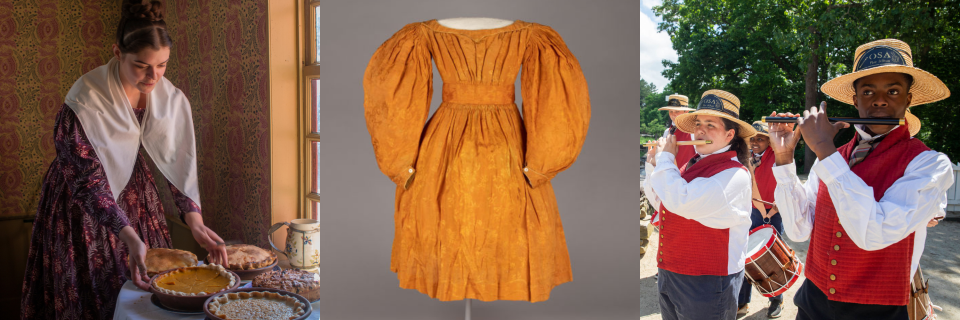
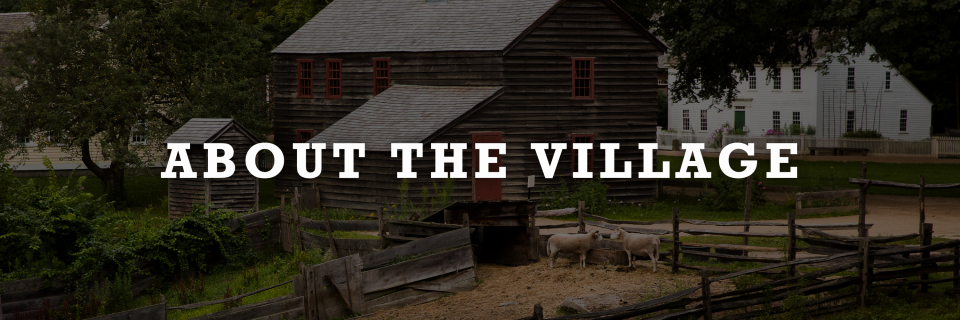
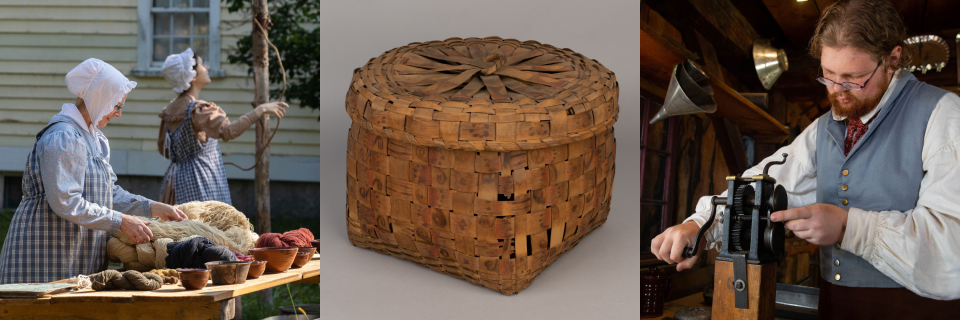
Old Sturbridge Village, the largest outdoor history museum in the Northeast, depicts a rural New England town of the early 19th century. The Village is designed to approximate the look and feel of a historic landscape and includes more than 40 historic buildings, such as houses, working farms, meetinghouses, a district school, country store, water-powered mills, professional and trade shops – all situated along the Quinebaug River on the homeland of the Nipmuc peoples. Visitors begin their self-directed exploration by entering through either the Visitor Center or the Museum Education Center and move through the museum on dirt roads and pathways. Wayfinding and interpretive signage is positioned strategically throughout the museum.
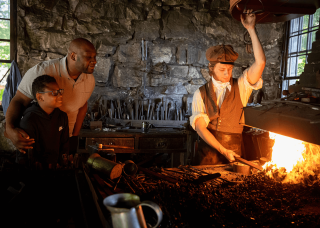
The 240 scenic acres of the museum are divided into the Center Village and Countryside. Exhibition spaces are found throughout the campus. The Center Village is a grassy common surrounded by homes, trade shops, and businesses. In the Countryside, one encounters homes, working farms, trade shops, a mill pond with three water-powered mills, and an exhibit gallery. The remainder of the exhibition spaces are in the Visitor Center and along the road to the Herb Garden.
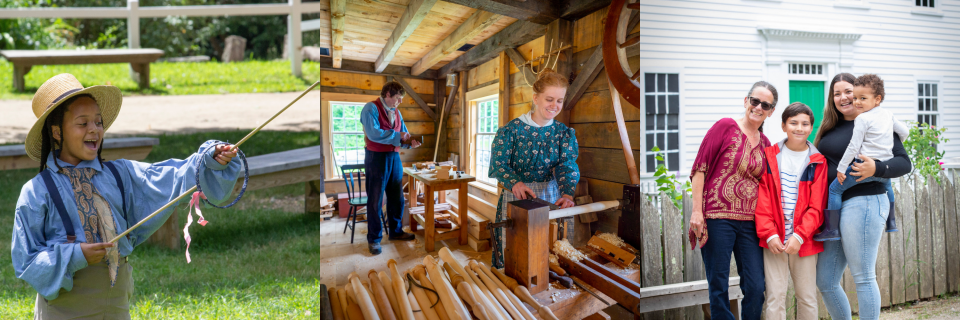
In addition to exploring the historic village on their own, visitors may encounter other spaces that enhance the museum’s story. The Museum Education Center has activity spaces including four working hearths, a woodworking studio, and other areas to engage groups in hands-on workshops. The 300-seat Brewer Theater, located in the Visitor Center, is used for lectures, performances, and multimedia showcases.
Our Mission
Old Sturbridge Village, a museum and learning resource of New England life, invites each visitor to find meaning, pleasure, relevance, and inspiration through the exploration of history.
Our Guiding Principles
- We experience and interpret history through the lens of the present. The Village explores life in the 1830s, but its staff and visitors live in the 21st century. This principle acknowledges the challenges of understanding the past and the evolving comprehension of history.
- We honor the land and the Indigenous peoples who stewarded it throughout the generations and continue to steward it today. Old Sturbridge Village is located on the traditional land of the Nipmuc peoples. This principle recognizes the first stewards of the land and their ongoing contributions.
- New England is inextricably linked to the growth and continuation of slavery. The time we interpret was one of growing racism, even among some anti-slavery activists, which has led to structural and systemic racism. This principle addresses misconceptions around slavery in the North, the treatment of enslaved people, and the legacy of slavery.
- We accept and respect each person’s full humanity, including gender, religion, race, ethnicity, ability, sexuality, age, and place of origin. People have always had multifaceted identities that are not always acknowledged in the historical record. This principle affirms our respect for each person’s self-identity.
Our History
In 1926, Industrialist Albert B. Wells of Southbridge, Massachusetts began collecting “primitive” antiques that represented daily life a century before. He became enraptured with collecting these tools, everyday furnishings, and gadgets and his collection grew rapidly. A decade later, in 1936, A.B. Wells’ son, George, convinced his father to move beyond his hobby of collecting and his dream of a gallery of “primitives,” but, rather, have “a live village, one with different shops operating.”
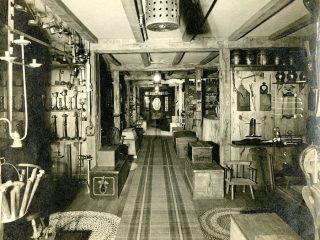
A.B. Wells and his brothers then purchased the Quinebaug Farm, setting in motion the creation of Old Sturbridge Village as we know it today. As A.B. Wells’ health declined in the 1940s, and his beloved daughter-in-law Ruth Dyer Wells, began to oversee more projects in the emerging Village. In 1945, a heart attack forced A.B. Wells to move to California for his health, but he continued to keep in touch with Ruth, and offered any advice or support she needed. A.B Wells’ passion for “primitives” and his industrialist spirit are the catalysts that began Old Sturbridge Village.
Old Sturbridge Village officially opened to the public on June 8, 1946, with 81 visitors paying a dollar apiece to tour the grounds and see displays of antiques arranged in the new and restored buildings. The Fitch House, Miner Grant Store, the Richardson House, the Grist Mill, and some other buildings were on site, but other buildings, like the Center Meetinghouse and Salem Towne House, were not added until later.
As the Village grew, so did public interest in seeing history brought to life. The Village welcomed its one millionth visitor in 1957 and since then, many more programs, exhibits and special events have been added and refined in an effort to constantly improve the visitor experience. Through the decades, we have grown well beyond a collection of antiques in a bucolic setting, or even an assemblage of historic craft demonstrations. The “living village” has taken on a vibrant life of its own as a leader in the fields of museum education and living history interpretation. As we celebrate our own past as well as New England’s early history, we continue to “make no little plans,” as we look ahead to a long and bright future.