

Saturday, May 24 - Monday, May 26, 2025
Times: The Village is open from 9:30 am to 5:00 pm
Cost: Included with standard daytime admission or Village membership. Standard daytime admission is $30 for adults, $28 for seniors (55+), $15 for youth (4-17), $15 for college students (with a valid college ID), and free for children 3 and under. Purchase tickets online and SAVE $3 per person!
Get Tickets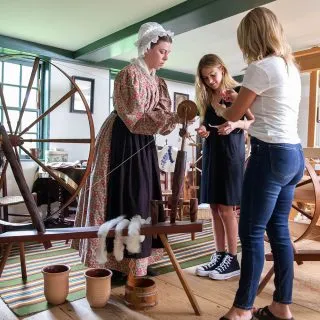 Wool Days at the Village
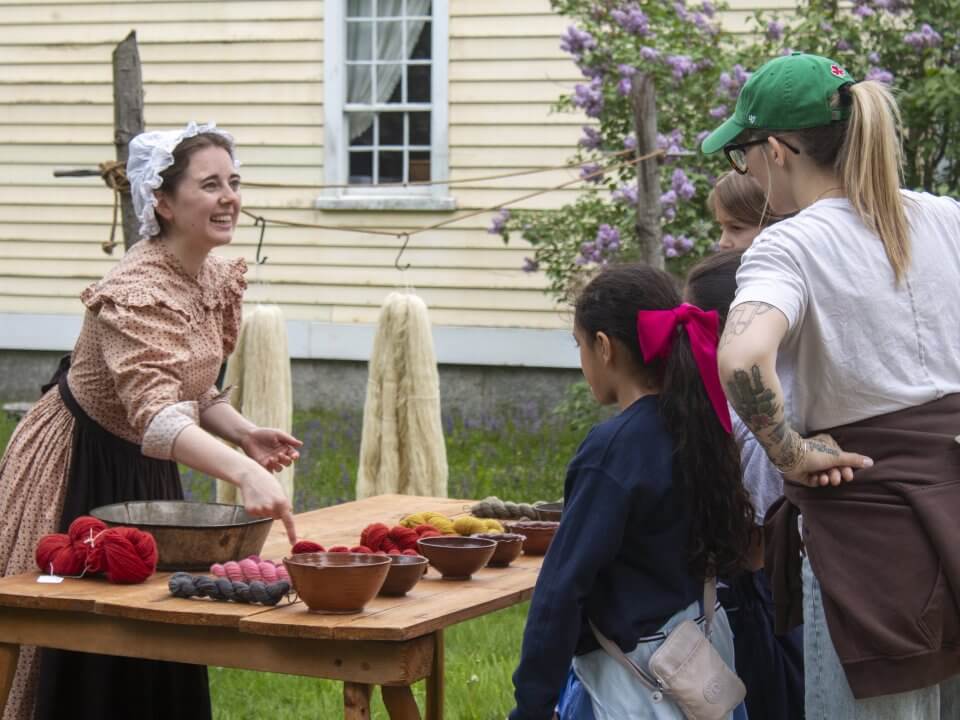
Discover how New England farmers used the wool from their sheep in the 1830s at Old Sturbridge Village’s annual Wool Days. Farmers will give the sheep their annual "haircut" while costumed historians demonstrate the entire wool textile process, from scouring and carding the wool to dyeing, spinning, and then knitting the dyed yarn.
Please note that some activities, such as shearing, scouring, and dyeing, are weather dependent. Details are subject to change without notice.
Memorial Day Weekend also marks the beginning of our annual Field of Flags campaign, supporting and honoring American Heroes.
Click here to purchase tickets
View Schedules (Subject to Change):
Highlights Include:
- Learn about the natural dyes used to produce an amazing array of colors in the 19th century
- See a demonstration of spinning woolen yarn on the great wheel
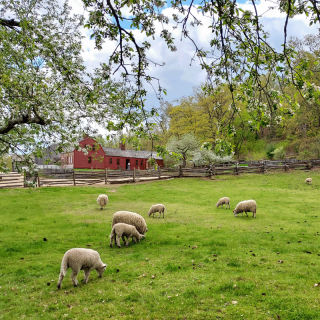
- Watch our farmers shear the sheep
- See the Carding Mill in action (weather and water-level permitting)
- Learn about some of the products early New Englanders made with wool
- See a sheep dog herding demonstration by Two Coves Farm (Saturday and Sunday only, at 11:00, 1:00, and 3:00)
- Watch a host of daily demonstrations including, hearth cooking, printing, blacksmithing, and shoe-making
- Find sheep plushies, skeins of yarn, learn-to-knit kits, and more in the shops at the Village
- Meet a guest llama and alpaca and learn about different types of wool.
- And more! A schedule will be available closer to the event.
Did you Know?
- Each of our sheep produces a fleece of about 5-7 pounds annually, which after washing and processing amounts to about 2-4 pounds of wool.
- With the high demand for quality wool by the textile industry and an embargo on imported wool, there was a high need for a local source of wool in early 19th-century New England. In 1840, there were about 4 million sheep in New England!
- Early New Englanders used a wide variety of natural dyestuffs to color their wool. Examples include logwood for mulberry, navy, or grey; madder root for reds and oranges; and cochineal insects for deep rose or bright red; and sage leaves for green.